
“The sensory education which prepares for the accurate perception of all the differential details in the qualities of things, is therefore the foundation of the observation of things and of phenomena which present themselves to our sense;” ~ Maria Montessori, The Advanced Montessori Method
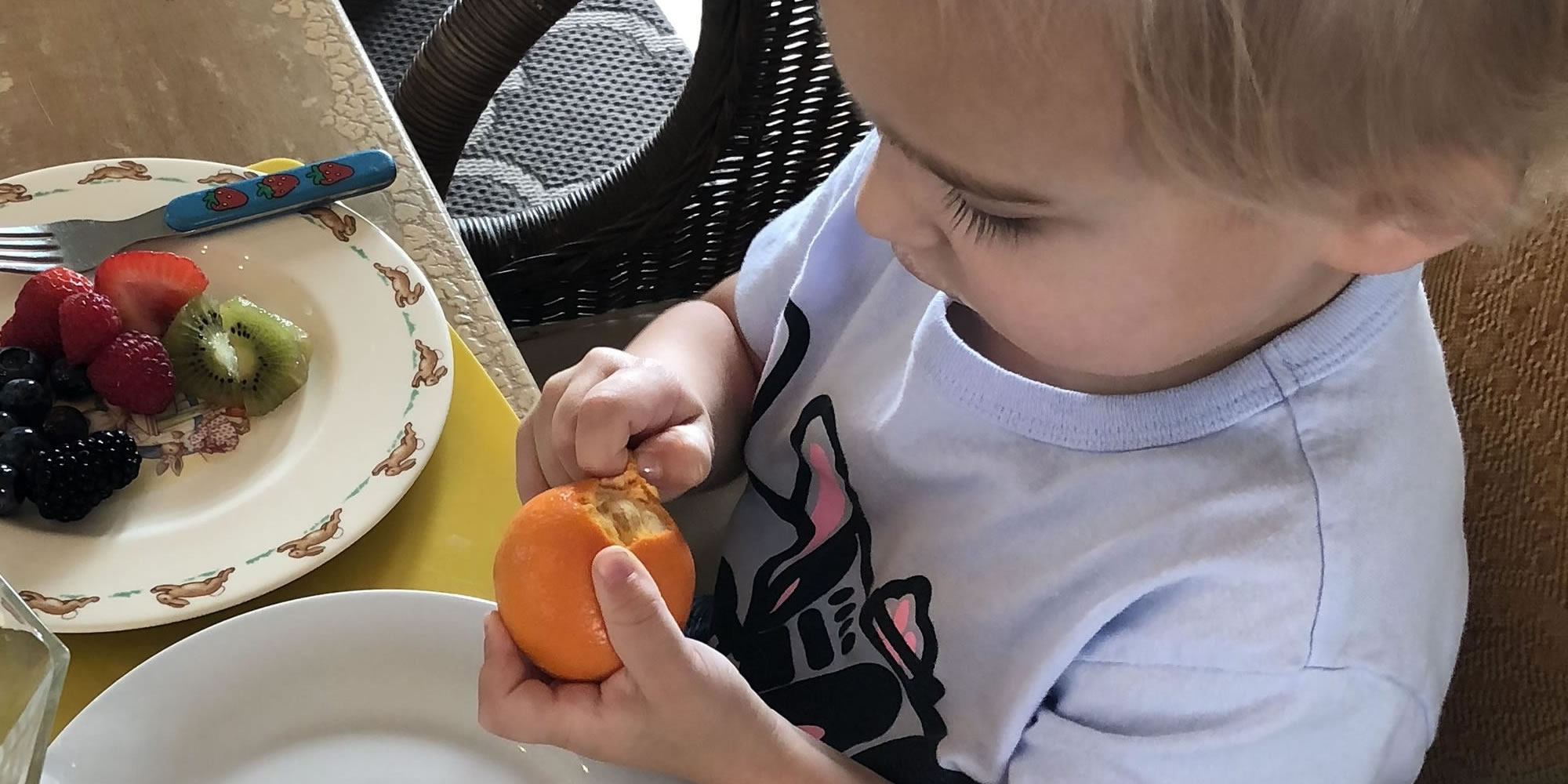
As an activity, peeling a clementine can offer the child rich language learning, fine motor and cognitive skill building opportunities.
Peeling A Clementine:
🍊🍊🍊 To prepare, place a few clementines in a small bowl.
🤲🏼🍊 Next, invite the child to choose one clementine.
👐🏼🍊 Meanwhile, allow time for child to feel the clementine’s exterior. The hands-on exploration also creates an internal impression.
🍊🤏🏼 After the child has finished, ask the child politely for a turn to hold the clementine. Begin deliberately turning it and then SHOW (Slow Hands Omit Words) how to begin peeling.
👃🏼🍊 Continuing with slow movements, create a slit in the clementine’s skin to and pull gently. Note its fresh and crisp citrus aroma with descriptive language as its skin is pulled back.
🤌🏼🍊Invite the child to finish peeling the clementine.
👐🏼🍊Once peeled, model how to pull apart a segment and ask the child to do the same.
👅🍊Once divided, the child may enjoy the clementine!
With a little guidance and assistance, the child will soon realize its sweet reward. As a snack, the clementine is delicious and nutritious. And as an activity, the child’s small motor skills and sensory experiences will be lasting. 🧡
“Whilst moving the objects used in our sensory exercises, the children’s hands are being prepared for all the actions necessary for writing.” ~ Maria Montessori, The Formation of Man